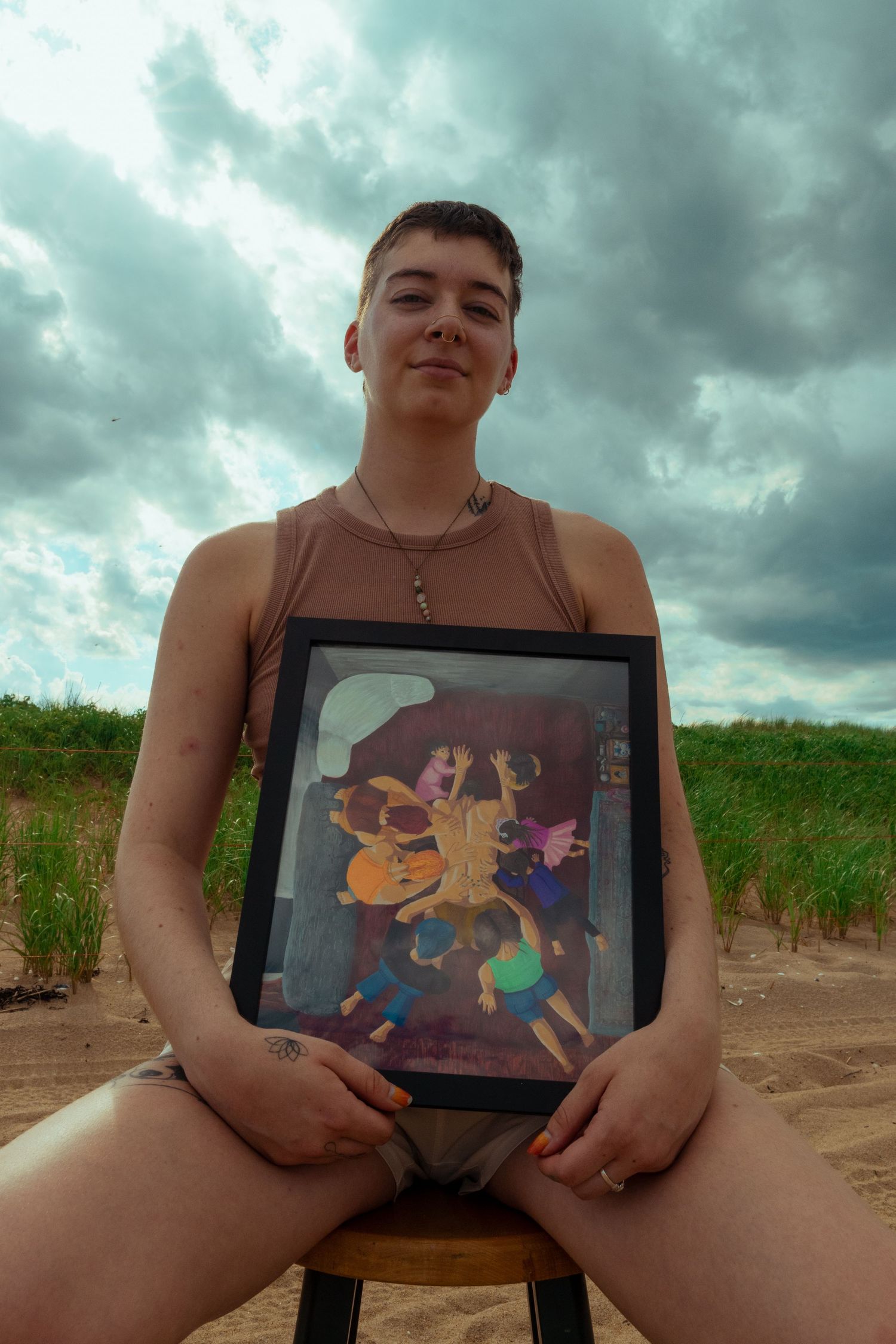
I Love All My Parts and They Love Me Back
film, spoken word
2024
Artist's Statement/Transcript
I started going to therapy when I was fourteen. When I was around eighteen, I was introduced to parts work, a modality centered around the idea that we as individuals are comprised of many parts of ourselves representing different ages, experiences, and perspectives from our lives. Since my introduction, I’ve felt a strong pull to this concept as someone who already felt that a multitude of versions of myself were existing simultaneously, crammed into my one physical body. I wanted to better understand these parts, heal these parts, and put them to rest. Or at least that’s what the therapists facilitating this work with me were trying to get me to succeed at.
Four years later, working the hardest i ever have to find peace in my 22 years of life, and I’m just now realizing that never should’ve been my goal. Every time I approached that work with a therapist, I would end the session in tears as a raw emotional open wound that I didn’t know how to stitch myself back together. I would feel like I was trying to deceive these parts of myself by revisiting painful memories and attempting to comfort them in the memory and rewrite history. It never eased the pain, nor did it quiet those parts. But I kept going back for more because the concept spoke so deeply to my soul.
Recently, I finally had a breakthrough around how I was supposed to be approaching parts work this whole time. I wasn’t supposed to be healing them or overwriting their lived experiences, and I certainly shouldn’t have tried to lay them to rest. All of those goals had one dreadful thing in common: dismissiveness. To expect them to stop hurting and quiet down was to deny their very real very painful experiences. I saw the truth of this as I worked on this art piece. I was inspired to create it after I attempted psychedelic breathing for the first time, alone on my bed one night. I didn’t hallucinate anything visually, but I did have a visceral sense that all of these younger parts of myself were surrounding me on my bed and placing comforting hands on my body as I clutched my blankets through wracking sobs. I was apologizing to them over and over again for not being enough, for not being able to heal them or put them at ease, and for still not being healed, myself, after all this time. But all they said back to me was, “I love you,” over and over and over. I cried harder, finding it impossible to believe them. But they showed me that night how much I had changed for the better over the years, how far I’d come, and how one thing had always remained constant: unconditional love for myself, even the younger versions of me that lived on in my neuropathology. Even when I loathed myself, I sought a better life. Even when I didn’t want to be alive, I exhausted all options that might lead me to a lust for life. And even when I gave up and hit my rock bottom, I came out the other side and made a roadmap to a better future. I always had enough love for myself to tear through the forest and find a path. And to trust that if the path was a dead end or had me feeling uneasy, I could step off and find a new one with more promise. I never felt shame readjusting my course when new information presented itself.
My parts showed me this, and I never would have come to that epiphany had I not given them the space to speak and be heard. And I doubt they ever would have led me here if I had continued in trying to force them to feel differently about their pain and thereby minimizing it. I wanted to honor this profound expansion of my inner world in the best way I know how: with art. I set out to create my most technically challenging piece yet: an image of numerous versions of myself supporting me in the time of that moment. In the end, I included nine human figures with minimal references for body positions, lights, shadows, colors, or the aerial view of my bedroom. At least eighty percent of this was guesswork and cerebral construction based on my limited understanding of the way human bodies look in different positions and at many different ages. I was also exploring the use of alcohol markers in a serious way for the first time and combining those with acrylic paint pens and colored pencils, which I’d never done before. I had never created something so complex and with such limits on color options before. I specifically gravitate towards painting for more flexibility in that area.
As I worked on this piece, it became a meditation on what I was integrating and still learning from my breathing session. It also became sacred time spent with my parts, during which I could show love and appreciation for them. Despite a long history of me starting and never finishing or sometimes never even returning to works of art, this quality time drew me back in time and time again as though it were a home full of love to return to that I could rely on.
Eventually, I completed the piece with pride. Though this work acts as a meaningful tribute to the younger versions of myself that have brought me to where I am today, I am much less invested in the art itself than I am in the relationships I’ve formed within myself. Now, in my day to day life, I can imagine my parts walking alongside me, holding my hands, caring for one another, and running around climbing things as they have always felt called to do. All because I welcome them to join me now. And I welcome their thoughts. And I welcome their emotions, no matter how big. I make the space for them without needing to question, “why?” I don’t need to know why. Because I love all my parts unconditionally, and now I can say with confidence, they love me back.
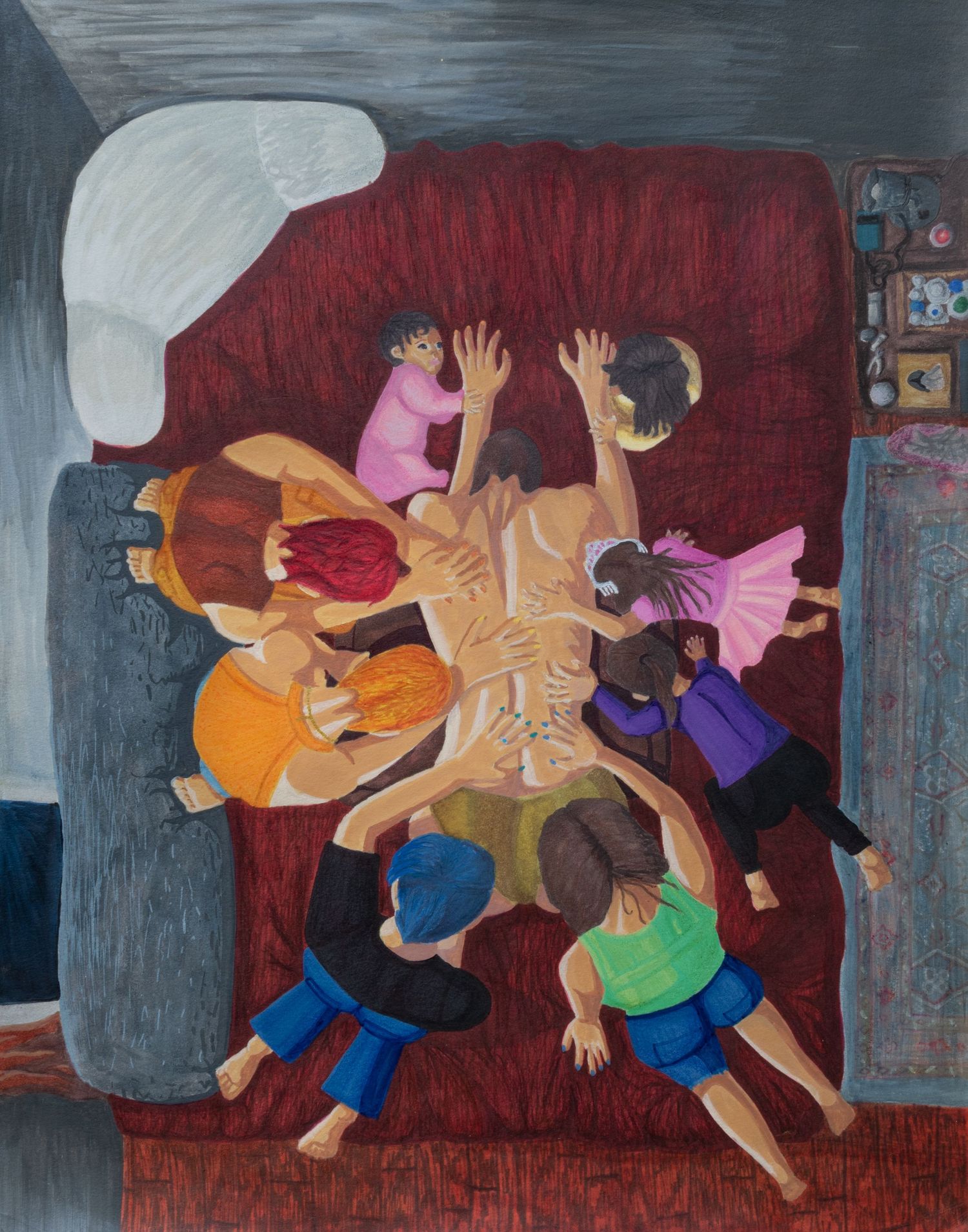
Original Illustration: Graphite, acrylic paint pens, colored pencils, alcohol markers all on 11”x14” drawing paper